

Rosenberg Self-Esteem Scale (RSES)
10-item self-report measure of global self-esteem, to include self-competence and self-liking.
Creator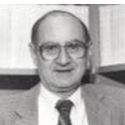 Dr. Morris Rosenberg, PhD
Instructions
Below is a list of statements dealing with your general feelings about yourself.
There are four possible answers for each of the 10 questions, from "strongly agree" to "strongly disagree.
Select a choice that reflects how strongly you agree or disagree with each statement.
Introduction
The Rosenberg Self-Esteem Scale (RSES) is a 10-question survey that measures a person’s overall self-esteem: how positively or negatively they feel about themselves. Sociologist Morris Rosenberg, PhD, developed it in 1965. It was designed to capture “a positive or negative attitude toward the self as a totality.” It’s perhaps the most widely used self-esteem measure in social science research, and is used by researchers, clinicians, and educators worldwide. It’s in the public domain and free to use.
Each item is answered on a four-point scale from strongly agree to strongly disagree; five items are reverse-scored. Total scores range from 0 to 30.
What it asks
People rate how much they agree with 10 statements about themselves, such as “On the whole, I am satisfied with myself” and “At times I think I am no good at all.” Five statements are positively worded and five are negatively worded. Each uses the same four answers: strongly agree, agree, disagree, or strongly disagree.
How it’s scored
Each answer is scored from 0 to 3, with higher numbers always meaning higher self-esteem:
Positively worded items (1, 3, 4, 7, 10): Strongly agree = 3, agree = 2, disagree = 1, strongly disagree = 0.
Negatively worded items (2, 5, 6, 8, 9): Scored in reverse: strongly agree = 0, agree = 1, disagree = 2, strongly disagree = 3.
This tool reports three scores:
Total score (0–30): The sum of all 10 items. Higher scores mean higher self-esteem.
Self-Competence (0–15): Items 3, 4, 5, 7, and 9. It assesses confidence in personal capabilities and sense of efficacy, reflecting beliefs about one’s ability to achieve goals and handle challenges effectively.
Self-Liking (0–15): Items 1, 2, 6, 8, and 10. It measures intrinsic self-worth and personal acceptance, representing fundamental feelings about oneself as a person independent of specific achievements.
Where the subscales come from
Rosenberg designed the scale to give one total score. Later researchers Romin Tafarodi and Alan Milne (2002) argued for distinguishing two dimensions of global self-esteem, self-competence and self-liking, and their studies identified a corresponding pair of factors in Rosenberg’s (1965) Self-Esteem Scale. The subscales can show whether someone’s self-esteem rests more on feeling capable or on feeling worthy as a person. Researchers still debate how distinct the two are: although some investigations suggest a two-factor structure, these factors may correspond to positively and negatively worded items rather than substantively distinct constructs. Treat the total score as the main result and the subscales as supporting detail.
How results are interpreted
There are no official cutoffs for low or high self-esteem, and the University of Maryland, where Rosenberg worked, doesn’t publish any. A commonly used informal guide treats total scores of about 15–25 as within the normal range and below 15 as suggesting low self-esteem. These numbers aren’t part of Rosenberg’s original scoring, so consider them as a general guide.
Limitations
The RSES measures how a person feels about themselves at the time they take it. It isn’t a diagnosis of any mental health condition. Low self-esteem can come with depression or anxiety, so persistently low scores, especially with low mood, are a reason to talk with a health professional. The scale is generally used with adolescents and adults.
All questions & possible results
RSE ItemsTitle not visible
1. On the whole, I am satisfied with myself.
Select one option:
- Strongly agree
- Agree
- Disagree
- Strongly disagree
2. At times, I think I am no good at all.
Select one option:
- Strongly agree
- Agree
- Disagree
- Strongly disagree
3. I feel that I have a number of good qualities.
Select one option:
- Strongly agree
- Agree
- Disagree
- Strongly disagree
4. I am able to do things as well as most other people.
Select one option:
- Strongly agree
- Agree
- Disagree
- Strongly disagree
5. I feel I do not have much to be proud of.
Select one option:
- Strongly agree
- Agree
- Disagree
- Strongly disagree
6. I certainly feel useless at times.
Select one option:
- Strongly agree
- Agree
- Disagree
- Strongly disagree
7. I feel that I'm a person of worth, at least on an equal plane with others.
Select one option:
- Strongly agree
- Agree
- Disagree
- Strongly disagree
8. I wish I could have more respect for myself.
Select one option:
- Strongly agree
- Agree
- Disagree
- Strongly disagree
9. All in all, I am inclined to feel that I am a failure.
Select one option:
- Strongly agree
- Agree
- Disagree
- Strongly disagree
10. I take a positive attitude toward myself.
Select one option:
- Strongly agree
- Agree
- Disagree
- Strongly disagree
Possible results
Self-Competence Score
Self-Competence assesses confidence in personal capabilities and sense of efficacy. This subscale captures beliefs about one’s ability to achieve goals and handle challenges effectively, with items focusing on feeling capable, having good qualities, and being able to do things as well as others.
Self-Liking Score
Self-Liking measures intrinsic self-worth and personal acceptance. This subscale reflects fundamental feelings about oneself as a person, independent of specific achievements, with items addressing overall satisfaction with oneself, feelings of worth, and positive self-regard.
Rosenberg Self-Esteem Scale Score
Higher scores indicate higher self-esteem.
Citation
Rosenberg, M. (1965). Society and the adolescent self-image. Princeton, NJ: Princeton University Press.
Literature
Rosenberg, M. (1965). Society and the adolescent self-image. Princeton, NJ: Princeton University Press.
https://www.jstor.org/stable/j.ctt183pjjhGreenberger, E., Chen, C., Dmitrieva, J., & Farruggia, S. P. (2003). Item-wording and the dimensionality of the Rosenberg Self-Esteem Scale: Do they matter? Personality and Individual Differences, 35(6), 1241-1254.
https://www.sciencedirect.com/science/article/pii/S0191886902003318?via%3DihubTafarodi RW, Milne AB. Decomposing global self-esteem. Journal of Personality. 2002;70(4):443–483.
https://pubmed.ncbi.nlm.nih.gov/12095187/Sinclair SJ, Blais MA, Gansler DA, Sandberg E, Bistis K, LoCicero A. Psychometric properties of the Rosenberg Self-Esteem Scale: overall and across demographic groups living within the United States. Eval Health Prof. 2010 Mar;33(1):56-80.
https://pubmed.ncbi.nlm.nih.gov/20164106/Schmitt DP, Allik J. Simultaneous administration of the Rosenberg Self-Esteem Scale in 53 nations: exploring the universal and culture-specific features of global self-esteem. J Pers Soc Psychol. 2005;89(4):623–642.
https://pubmed.ncbi.nlm.nih.gov/16287423/Hyland P, Boduszek D, Dhingra K, Shevlin M, Egan A. A bifactor approach to modelling the Rosenberg Self Esteem Scale. Pers Individ Dif. 2014;66:188–192.
https://pure.hud.ac.uk/en/publications/a-bifactor-approach-to-modelling-the-rosenberg-self-esteem-scale/
- Creator
- Provided by
EVAL Foundation
- Contributor · Reviewer
Jennifer Glen, DNP, FNP-BCEVAL Health, Chief Medical Officer EVAL Foundation
Related evaluations
Kessler Psychological Distress Scale (K10)
10-item measure of non-specific psychological distress over the past 4 weeks.
 Dr. Ronald C. Kessler, PhD
Kessler Psychological Distress Scale (K6)
6-item measure of non-specific psychological distress over the past 4 weeks.
 Dr. Ronald C. Kessler, PhD
Patient Health Questionnaire-9 (PHQ-9) Adult
10 - item assessment tool for screening, diagnosing, monitoring and measuring the severity of depression.
 ISSWSH
Adverse Childhood Experiences Questionnaire (ACE-Q)
10 - item questionnaire to assess your exposure to potentially traumatic experiences occurring from birth to age 18.
ISSWSHPatient Health Questionnaire-2 (PHQ-2)
2-item depression screening tool derived from the first two questions of the PHQ-9
 Dr. Robert Spitzer, MD
General Anxiety Disorder (GAD-7)
Measure severity of anxiety
 Dr. Robert L. Spitzer, MD
Generalized Anxiety Disorder 2-item (GAD-2)
2-item anxiety screening tool derived from the first two questions of the GAD-7
 Dr. Robert Spitzer, MD
The RAND 20-Item Short Form Health Survey (SF-20)
A 20-item, patient-reported survey (RAND v.1) measuring health status and quality of life across six health domains.
 Dr. Anita L. Stewart, PhD
The RAND (v.1) 36-Item Short Form Survey Instrument (SF-36)
A 36-item, patient-reported survey (RAND v.1) measuring health status and quality of life across eight health domains.
 Dr. John E. Ware Jr., PhD
Also from EVAL Foundation
Adult Self-Report Scale (ASRS-V1.1) for ADHD 6-Question Screener
Six-item ASRS v1.1 Part A screener for attention deficit-hyperactivity disorder (ADHD) symptoms in adults.
 Dr. Lenard Adler, MD
Alcohol Use Disorders Identification Test - C (AUDIT-C)
A 3-item tool to screen for unhealthy alcohol use in patients who may not be alcohol-dependent.
 Dr. Katharine Bradley, MD, MPH
Alcohol Use Disorders Identification Test (AUDIT)
A 10-item tool to screen for hazardous alcohol use, harmful use, and alcohol dependence.
 World Health Organization Collaborative Project
American Shoulder and Elbow Surgeons (ASES) Shoulder Score
15-item assessment of shoulder pain and functional limitations in activities of daily living.
 Dr. Robin R. Richards, MD, FRCSC, FAAOS, FAOA
Behavioral Activity Rating Scale (BARS)
A 1-item rating scale to quantify a patient's level of agitation in acute care or psychiatric settings.
CAGE Alcohol Questionnaire
4-item questionnaire that can indicate potential problems with alcohol use.
Drug Abuse Screening Test (DAST-10)
A patient self-report questionnaire to screen for problematic drug use (excluding alcohol/tobacco).
 Dr. Harvey A. Skinner, Ph.D.
Foot and Ankle Ability Measure (FAAM)
Assesses functional limitations and disability related to foot and ankle conditions in daily activities and sports.
 Dr. Jesse Van Swearingen, PhD, PT, FAPTA