

Body Mass Index (BMI) and Body Surface Area (BSA)
Calculates body mass index and body surface area (Mosteller formula).
Creatore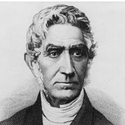 Adolphe Quetelet (1796-1874)
Min 0 – Max 800
Introduction
Adolphe Quetelet (1796-1874) was a belgian astronomer, mathematician, statistician, and sociologist who founded and directed the Brussels Observatory and was influential in introducing statistical methods to the social sciences. He originally created the equation for body mass in 1832 as a method to define the standard proportions of the human build. Ancel Keys, a physiology professor, used Quetelet's equation as part of a 1972 published report on obesity and created the name body mass index or BMI.
BMI may be a simple and cost-effective measure of body fat. BMI evaluates the relationship of body mass to height, but it may not be accurate for everyone. BMI does not differentiate between the ratio of body fat to muscle present in body mass nor factor gender, developmental or ethnic considerations. Examples of BMI Limitations:
May be an inappropriate measure for muscular or fit body types. Body fat measurements may be more accurate.
Ethnic variations in height and stature.
BMI offers a more accurate understanding of body composition than weight alone. Additionally, BSA is used in specific therapeutic use cases, such as the treatment of burns.
Rules
Body mass index (kg/m²) = weight(kg) / (height(m))²
Body surface area (m²) = (Height (cm) x Weight (kg) / 3600)^0.5
Uses the Mosteller formula
BMI (kg/m²) | Weight |
<18.5 | Underweight |
18.5-24.9 | Normal Weight |
25.0-29.9 | Overweight |
30.0-34.9 | Obese Class 1 |
35.0-39.9 | Obese Class 2 |
≥40.0 | Obese Class 3 |
Tutte le domande e i risultati possibili
QuestionsTitolo non visibile
Weight
A number between 0 and 800, in kg or lbs.
Height
A number between 0 and 200, in cm or in.
Target BMI
A number between 2 and 60, in kg/m².
Risultati possibili
Target Weight for BMI Target
Target Weight for BMI Target
Body Mass Index
BMI may be a simple and cost-effective measure of body fat. BMI evaluates the relationship of body mass to height, but it may not be accurate for everyone. BMI does not differentiate between the ratio of body fat to muscle present in body mass nor factor gender, developmental or ethnic considerations. Examples of BMI Limitations:
- May be an inappropriate measure for muscular or fit body types. Body fat measurements may be more accurate.
- Ethnic variations in height and stature.
Citazione
Gadzik J. "How much should I weigh?"--Quetelet's equation, upper weight limits, and BMI prime. Conn Med. 2006 Feb;70(2):81-8.
Letteratura
"How much should I weigh?"--Quetelet's equation, upper weight limits, and BMI prime. Conn Med. 2006 Feb;70(2):81-8.
https://pubmed.ncbi.nlm.nih.gov/16768059/Body Mass Index (BMI)
https://www.cdc.gov/bmi/about/index.html
- Creatore
- Fornito da
EVAL Foundation
- Collaboratore · Revisore
Jennifer Glen, DNP, FNP-BCEVAL Health, Chief Medical Officer EVAL Foundation
- Collaboratore
Tim MichalskiCEOEVAL Foundation
Valutazioni correlate
Creatinine Clearance (Cockcroft-Gault Equation)
Calculates CrCl using the Cockcroft-Gault Equation
 Dr. Donald W. Cockcroft, MD
Creatinine Clearance (Cockcroft-Gault) Without BMI Adjustment
Calculates CrCl using the Cockcroft-Gault Equation
 Dr. Donald W. Cockcroft, MD
MDRD GFR Equation
Estimates glomerular filtration rate based on creatinine and patient characteristics
 Dr. Andrew S. Levey, MD
CKD-EPI Equations for Glomerular Filtration Rate (GFR)
Uses serum creatinine, serum cystatin C, or both to estimate GFR.
 Dr. Andrew S. Levey, MD
LDL Calculation
LDL calculation from total cholesterol, HDL and triglycerides.
 Dr. William Friedewald, MD
Anche da EVAL Foundation
Alcohol Use Disorders Identification Test - C (AUDIT-C)
A 3-item tool to screen for unhealthy alcohol use in patients who may not be alcohol-dependent.
 Dr. Katharine Bradley, MD, MPH
Alcohol Use Disorders Identification Test (AUDIT)
A 10-item tool to screen for hazardous alcohol use, harmful use, and alcohol dependence.
 World Health Organization Collaborative Project
American Shoulder and Elbow Surgeons (ASES) Shoulder Score
15-item assessment of shoulder pain and functional limitations in activities of daily living.
 Dr. Robin R. Richards, MD, FRCSC, FAAOS, FAOA
Behavioral Activity Rating Scale (BARS)
A 1-item rating scale to quantify a patient's level of agitation in acute care or psychiatric settings.
Drug Abuse Screening Test (DAST-10)
A patient self-report questionnaire to screen for problematic drug use (excluding alcohol/tobacco).
 Dr. Harvey A. Skinner, Ph.D.
Foot and Ankle Ability Measure (FAAM)
Assesses functional limitations and disability related to foot and ankle conditions in daily activities and sports.
 Dr. Jesse Van Swearingen, PhD, PT, FAPTA
Foot and Ankle Disability Index (FADI)
Assess functional limitations of those with a variety of foot and ankle conditions
 Dr. RobRoy Martin, PhD, PT, CSCS
General Anxiety Disorder (GAD-7)
Measure severity of anxiety
 Dr. Robert L. Spitzer, MD