

Glasgow Coma Scale (GCS)
Coma severity SCALE based on Eye (4), Verbal (5), and Motor (6) criteria. Applies even if any component is NOT testable.
Creator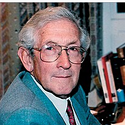 Dr. Bryan Jennett (d. 2008), MD
Instructions
Record the patient's BEST response in each of the three categories: eye opening, verbal response, and motor response.
If a category cannot be tested (for example, the eyes are swollen shut or the patient is intubated), select "Not testable (NT)" and interpret the total with caution.
CAUTION: The Glasgow Coma Scale (applicable if any of the three components is NOT testable) is different than the Glasgow Coma Score (applicable when all three components are testable).
If local injury, edema, or otherwise unable to be assessed, mark "Not testable (NT)"
Introduction
The Glasgow Coma Scale (GCS) is the most widely used tool for assessing a person’s level of consciousness. Graham Teasdale and Bryan Jennett, neurosurgeons at the University of Glasgow, introduced it in 1974. It was originally designed for patients with head injuries, but it’s now used across emergency medicine, intensive care, and neurology to track consciousness over time. It scores three types of response separately, so it gives a consistent shared language for describing a patient’s condition and spotting changes.
How it’s scored: The three component scores of the Glasgow Coma Score are added for a total from 3 (no response) to 15 (fully alert and oriented). An additional result is also recorded as a Glasgow Coma Scale (E3 V3 M4), because the same total can describe very different patients.
Component | Response | Points |
|---|---|---|
Eye | Eyes open spontaneously | +4 |
Eye opening to verbal command | +3 | |
Eye opening to pain | +2 | |
No eye opening | +1 | |
Not testable* | NT | |
Verbal | Oriented | +5 |
Confused | +4 | |
Inappropriate words | +3 | |
Incomprehensible sounds | +2 | |
No verbal response | +1 | |
Not testable/intubated* | NT | |
Motor | Obeys commands | +6 |
Localizes pain | +5 | |
Withdrawal from pain | +4 | |
Flexion to pain | +3 | |
Extension to pain | +2 | |
No motor response | +1 | |
Not testable* | NT |
*Individual components may be not testable due to any of the following (note this is not a comprehensive list):
Eye: local injury and/or edema.
Verbal: intubation.
All (eye, verbal, motor): sedation, paralysis, and ventilation eliminating all responses.
Untestable components: Sometimes a response can’t be tested. A patient who is intubated can’t speak, and swelling may keep the eyes shut. That component should be recorded as NT (not testable), not scored as 1, because a score of 1 means “no response” and would make the patient appear more impaired than they are. In that case the components are reported individually, for example “E3 V-NT M5,” rather than combined into a total. Some hospitals add a “T” suffix for intubated patients, such as “8T,” but that’s a local convention, not official scoring.
Results
The Glasgow Coma Score is calculated by addition of the total points selected under each component (eye, verbal, motor) below, e.g. "15 points".
The Glasgow Coma Scale is comprised of the individual components, e.g. "E(4) V(5) M (6)".
How results are interpreted: For traumatic brain injury, totals are commonly grouped as 13–15 mild, 9–12 moderate, and 3–8 severe. A score of 8 or less signals a severely reduced level of consciousness, and is often used as a threshold to consider protecting the airway. A falling score over repeated checks is a warning sign that needs urgent assessment, even if each single score looks moderate.
Management Considerations
If a component is untestable, a score of 1 should not be assigned (Teasdale 2014). In this circumstance, summation of the findings into a total Glasgow Coma Score is invalid.
Clinical decisions should not be based solely on the GCS score.
Consider intubation if the GCS ≤8 and there is clinical concern the patient is unable to protect their airway or that they have an expected worsening clinical course based on exam or imaging findings.
A rapidly declining or waxing and waning GCS is concerning and intubation should be considered in the context of the patient's overall clinical picture.
All questions & possible results
GCS ItemsTitle not visible
Best eye response
If local injury, edema, or otherwise unable to be assessed, mark "Not testable (NT)"
Select one option:
- Spontaneously
- To verbal command
- To pain
- No eye opening
- Not testable (NT)
Best verbal response
If intubated or otherwise unable to be assessed, mark "Not testable (NT)"
Select one option:
- Oriented
- Confused
- Inappropriate words
- Incomprehensible sounds
- No verbal response
- Not testable/intubated (NT)
Best motor response
If on sedation/paralysis or unable to be assessed, mark "Not testable (NT)"
Select one option:
- Obeys commands
- Localizes pain
- Withdrawal from pain
- Flexion to pain
- Extension to pain
- No motor response
- Not testable (NT)
Possible results
Glasgow Coma Score
Clinical decisions should not be based solely on the GCS score.
Consider intubation if the GCS ≤8 and there is clinical concern the patient is unable to protect their airway or that they have an expected worsening clinical course based on exam or imaging findings.
A rapidly declining or waxing and waning GCS is concerning and intubation should be considered in the context of the patient's overall clinical picture.
Glasgow Coma Score cannot be calculated (one or more components not testable)
If a component is untestable, a score of 1 should not be assigned (Teasdale 2014). In this circumstance, summation of the findings into a total Glasgow Coma Score is invalid.
Clinical decisions should not be based solely on the GCS score.
Consider intubation if the GCS ≤8 and there is clinical concern the patient is unable to protect their airway or that they have an expected worsening clinical course based on exam or imaging findings.
A rapidly declining or waxing and waning GCS is concerning and intubation should be considered in the context of the patient's overall clinical picture.
Citation
Teasdale G, Jennett B. Assessment of coma and impaired consciousness. A practical scale. Lancet. 1974 Jul 13;2(7872):81-4.
Literature
Teasdale G, Jennett B. Assessment of coma and impaired consciousness. A practical scale. Lancet. 1974 Jul 13;2(7872):81-4.
https://pubmed.ncbi.nlm.nih.gov/4136544/Moore L, Lavoie A, Camden S, Le Sage N, Sampalis JS, Bergeron E, Abdous B. Statistical validation of the Glasgow Coma Score. J Trauma. 2006 Jun;60(6):1238-43; discussion 1243-4.
https://pubmed.ncbi.nlm.nih.gov/16766966/Reith FC, Van den Brande R, Synnot A, Gruen R, Maas AI. The reliability of the Glasgow Coma Scale: a systematic review. Intensive Care Med. 2016 Jan;42(1):3-15.
https://pubmed.ncbi.nlm.nih.gov/26564211/Teasdale G, Jennett B. Assessment of coma and severity of brain damage. Anesthesiology. 1978 Sep;49(3):225-6.
https://pubmed.ncbi.nlm.nih.gov/686455/Teasdale G, Jennett B, Murray L, Murray G. Glasgow coma scale: to sum or not to sum. Lancet. 1983 Sep 17;2(8351):678.
https://pubmed.ncbi.nlm.nih.gov/6136811/Middleton PM. Practical use of the Glasgow Coma Scale; a comprehensive narrative review of GCS methodology. Australas Emerg Nurs J. 2012 Aug;15(3):170-83.
https://pubmed.ncbi.nlm.nih.gov/22947690/Teasdale G, Maas A, Lecky F, Manley G, Stocchetti N, Murray G. The Glasgow Coma Scale at 40 years: standing the test of time. Lancet Neurol. 2014 Aug;13(8):844-54.
https://pubmed.ncbi.nlm.nih.gov/25030516/
- Creator
- Creator
Dr. Graham Teasdale, MBBSHonorary professor at the Institute of Health and Wellbeing, University of Glasgow. Professor of neurosurgery, head of the department of neurosurgery, and associate dean for medical research at the University of Glasgow.
- Provided by
EVAL Foundation
- Contributor · Reviewer
Jennifer Glen, DNP, FNP-BCEVAL Health, Chief Medical Officer EVAL Foundation
Related evaluations
PSI/PORT Score: Pneumonia Severity Index for CAP
Risk stratification of community-acquired pneumonia to help determine inpatient versus outpatient treatment.
 Dr. Michael J. Fine, MD, MSc
Canadian CT Head Injury/Trauma Rule
Clears head injury without imaging
 Dr. Ian Stiell, MD, MSc, FRCPC
New Orleans/Charity Head Trauma/Injury Rule
Clears head injury without imaging
 Dr. Micelle J. Haydel, MD
RibScore
Predicts adverse pulmonary outcomes from rib fracture
 Dr. Brandon C. Chapman, MD
Injury Severity Score (ISS)
Standardizes severity of traumatic injury based on worst injury of 6 body systems
 Dr. Susan Baker , MPH
Also from EVAL Foundation
Alcohol Use Disorders Identification Test - C (AUDIT-C)
A 3-item tool to screen for unhealthy alcohol use in patients who may not be alcohol-dependent.
 Dr. Katharine Bradley, MD, MPH
Alcohol Use Disorders Identification Test (AUDIT)
A 10-item tool to screen for hazardous alcohol use, harmful use, and alcohol dependence.
 World Health Organization Collaborative Project
American Shoulder and Elbow Surgeons (ASES) Shoulder Score
15-item assessment of shoulder pain and functional limitations in activities of daily living.
 Dr. Robin R. Richards, MD, FRCSC, FAAOS, FAOA
Behavioral Activity Rating Scale (BARS)
A 1-item rating scale to quantify a patient's level of agitation in acute care or psychiatric settings.
CAGE Alcohol Questionnaire
4-item questionnaire that can indicate potential problems with alcohol use.
Drug Abuse Screening Test (DAST-10)
A patient self-report questionnaire to screen for problematic drug use (excluding alcohol/tobacco).
 Dr. Harvey A. Skinner, Ph.D.
Foot and Ankle Ability Measure (FAAM)
Assesses functional limitations and disability related to foot and ankle conditions in daily activities and sports.
 Dr. Jesse Van Swearingen, PhD, PT, FAPTA
Foot and Ankle Disability Index (FADI)
Assess functional limitations of those with a variety of foot and ankle conditions
 Dr. RobRoy Martin, PhD, PT, CSCS