

Bishop Score for Vaginal Delivery and Induction of Labor
Predicts likelihood of successful vaginal delivery.
Creator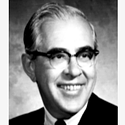 Dr. Edward H. Bishop, MD
Instructions
Introduction
The Bishop score is a quick assessment of how ready the cervix is for labor. It’s used most often to decide whether to induce labor and how. Dr. Edward Bishop, an obstetrician, introduced it in 1964. Before labor starts, the cervix softens, thins, opens, and moves forward, a process called ripening. The Bishop score turns those changes into a single number. A higher score means the cervix is more “favorable,” and induction is more likely to lead to a vaginal birth. It remains one of the most widely used tools in labor and delivery.
What it assesses
During a vaginal exam, the clinician rates five features of the cervix and the baby’s position:
Feature | 0 | 1 | 2 | 3 |
|---|---|---|---|---|
Dilation (opening) | Closed | 1–2 cm | 3–4 cm | 5 cm or more |
Effacement (thinning) | 0–30% | 40–50% | 60–70% | 80% or more |
Station (baby’s head position) | −3 | −2 | −1 or 0 | +1 or +2 |
Consistency | Firm | Medium | Soft | — |
Position of cervix | Posterior | Middle | Anterior | — |
How it’s scored
The five scores are added for a total from 0 to 13. Dilation, effacement, and station each range from 0 to 3, and consistency and position each range from 0 to 2.
Results and Interpretation
Bishop Score (≤5 pts): Suggests unfavorable cervix. Induction may be necessary for successful vaginal delivery.
Labor is unlikely to start without induction.
Induction with an unfavorable cervix is associated with a longer labor and a higher likelihood of cesarean delivery
Cervical ripening agents are often considered.
Success rates tend to vary based on indication for induction and weeks gestation.
Bishop Score (6-7 pts): Does not definitively predict whether or not induction will be successful. Consider induction or augmentation of labor based on clinical judgment.
The success of induction is less predictable; clinical judgement, parity, and the overall obstetric picture should guide management.
Success rates tend to vary based on indication for induction and weeks gestation.
Bishop Score (≥8 pts): Suggests spontaneous vaginal delivery is more likely and augmentation or induction may be unnecessary.
The cervix is favorable.
The probability of vaginal delivery after induction is similar to that after spontaneous labor.
Success rates tend to vary based on indication for induction and weeks gestation.
For patients: A low Bishop score doesn’t mean you can’t have a vaginal birth. It usually means your cervix needs some help softening and opening first, which is a routine part of many inductions.
Limitations
The Bishop score depends on a manual exam, so different clinicians may score the same patient differently. It was originally developed in women who had given birth before, so it’s less predictive for first pregnancies. Some practices also use ultrasound measurement of cervical length alongside it. It’s one factor in planning an induction, together with the reason for induction, the pregnancy’s progress, and the patient’s preferences.
All questions & possible results
Cervical ExaminationTitle not visible
Cervical dilation
Select one option:
- Closed
- 1-2 cm
- 3-4 cm
- ≥5 cm
Cervical position
Select one option:
- Posterior
- Mid position
- Anterior
Cervical effacement
Select one option:
- 0-30%
- 40-50%
- 60-70%
- ≥80%
Cervical consistency
Select one option:
- Firm
- Medium
- Soft
Fetal station (relative to ischial spines)
Select one option:
- -3
- -2
- -1 or 0
- +1 or +2
Possible results
Bishop Score (≥8 pts): Suggests spontaneous vaginal delivery is more likely and augmentation or induction may be unnecessary.
The cervix is favorable.
The probability of vaginal delivery after induction is similar to that after spontaneous labor.
Success rates tend to vary based on indication for induction and weeks gestation.
Bishop Score (≤5 pts): Suggests unfavorable cervix. Induction may be necessary for successful vaginal delivery.
Labor is unlikely to start without induction.
Induction with an unfavorable cervix is associated with a longer labor and a higher likelihood of cesarean delivery
Cervical ripening agents are often considered.
Success rates tend to vary based on indication for induction and weeks gestation.
Bishop Score (6-7 pts): Does not definitively predict whether or not induction will be successful. Consider induction or augmentation of labor based on clinical judgment.
The success of induction is less predictable; clinical judgement, parity, and the overall obstetric picture should guide management.
Success rates tend to vary based on indication for induction and weeks gestation.
Citation
BISHOP EH. PELVIC SCORING FOR ELECTIVE INDUCTION. Obstet Gynecol. 1964 Aug;24:266-8.
Literature
BISHOP EH. PELVIC SCORING FOR ELECTIVE INDUCTION. Obstet Gynecol. 1964 Aug;24:266-8.
https://pubmed.ncbi.nlm.nih.gov/14199536/Newman RB, Goldenberg RL, Iams JD, Meis PJ, Mercer BM, Moawad AH, Thom E, Miodovnik M, Caritis SN, Dombrowski M; National Institute of Child Health and Human Development (NICHD) Maternal-Fetal Medicine Units Network (MFMU). Preterm prediction study: comparison of the cervical score and Bishop score for prediction of spontaneous preterm delivery. Obstet Gynecol. 2008 Sep;112(3):508-15.
https://pubmed.ncbi.nlm.nih.gov/18757646/Laughon SK, Zhang J, Troendle J, Sun L, Reddy UM. Using a simplified Bishop score to predict vaginal delivery. Obstet Gynecol. 2011 Apr;117(4):805-811.
https://pmc.ncbi.nlm.nih.gov/articles/PMC3297470/


Related evaluations

Also from EVAL Foundation
Adult Self-Report Scale (ASRS-V1.1) for ADHD 6-Question Screener
Six-item ASRS v1.1 Part A screener for attention deficit-hyperactivity disorder (ADHD) symptoms in adults.
 Dr. Lenard Adler, MD
Alcohol Use Disorders Identification Test - C (AUDIT-C)
A 3-item tool to screen for unhealthy alcohol use in patients who may not be alcohol-dependent.
 Dr. Katharine Bradley, MD, MPH
Alcohol Use Disorders Identification Test (AUDIT)
A 10-item tool to screen for hazardous alcohol use, harmful use, and alcohol dependence.
 World Health Organization Collaborative Project
American Shoulder and Elbow Surgeons (ASES) Shoulder Score
15-item assessment of shoulder pain and functional limitations in activities of daily living.
 Dr. Robin R. Richards, MD, FRCSC, FAAOS, FAOA
Behavioral Activity Rating Scale (BARS)
A 1-item rating scale to quantify a patient's level of agitation in acute care or psychiatric settings.
CAGE Alcohol Questionnaire
4-item questionnaire that can indicate potential problems with alcohol use.
Drug Abuse Screening Test (DAST-10)
A patient self-report questionnaire to screen for problematic drug use (excluding alcohol/tobacco).
 Dr. Harvey A. Skinner, Ph.D.
Foot and Ankle Ability Measure (FAAM)
Assesses functional limitations and disability related to foot and ankle conditions in daily activities and sports.
 Dr. Jesse Van Swearingen, PhD, PT, FAPTA